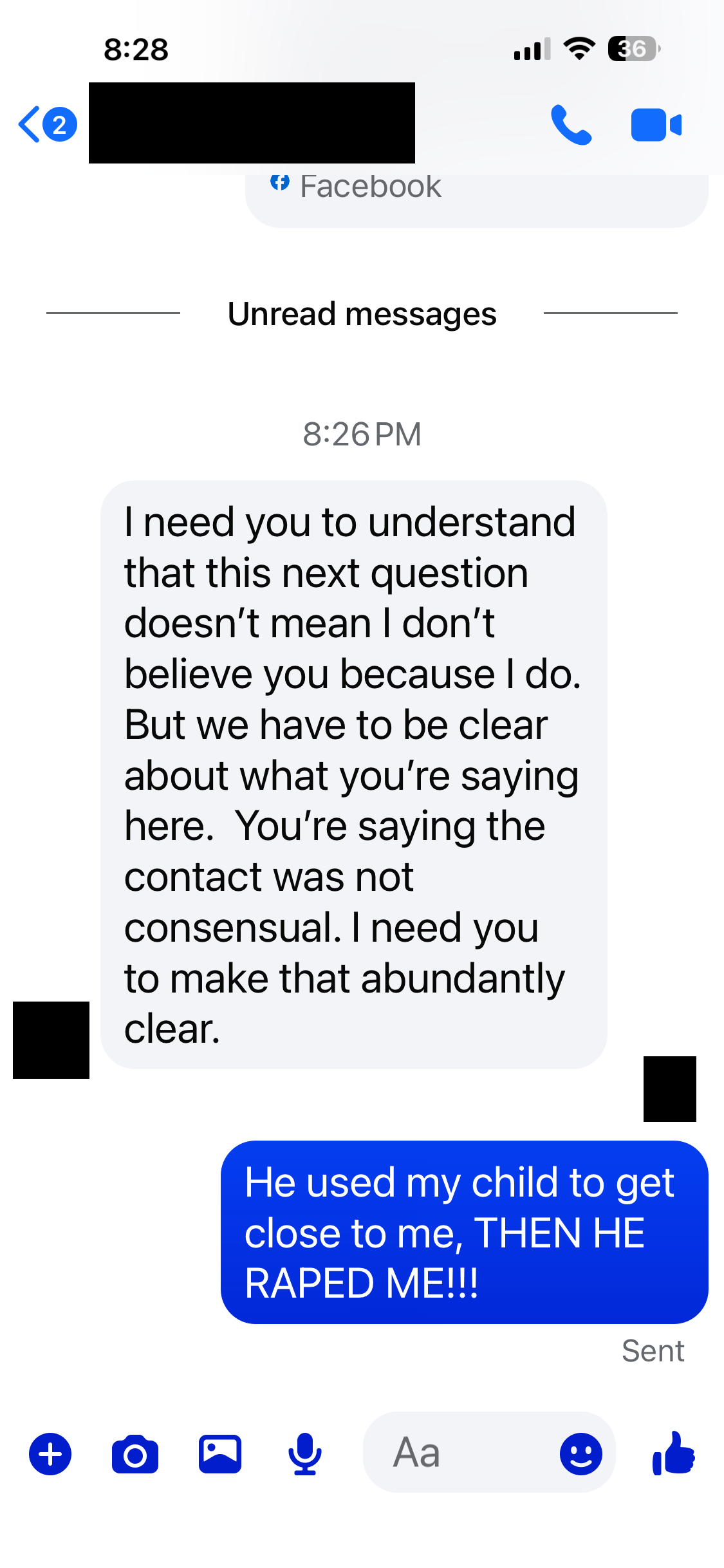
“He used my child to get close to me, and then he raped me.”
The words came from a woman who says she once believed Steve Sanson could help her get her son back.
At the time, she says, she was homeless. She had lost custody of her child and had gone years without seeing him. She was not looking for a political connection, a night out or a favor she could trade.
She wanted her son.
According to the woman, Sanson offered her something that felt more valuable than money: access. He presented himself as a Family Court advocate who knew judges personally and could reach people inside a system that had become impenetrable to her.
She says she believed him.
What she now alleges happened after that is the reason her identity is being withheld. Her accusation has not been adjudicated, and no criminal charge arising from her account has been identified. Sanson has been contacted repeatedly for comment about the allegation. He has not responded.
But the allegation cannot be understood only as a claim about what happened between two people. It is also a story about trust, vulnerability and the power created when someone says: I know the people who can help you.
Las Vegas has recently been forced to confront that kind of power in another case.
For years, Jon Ponder was one of Nevada's most celebrated stories of redemption. After serving time in federal prison, he founded Hope for Prisoners, an organization devoted to helping people rebuild their lives after incarceration. Sheriffs, prosecutors, governors and business leaders stood beside him. In 2020, President Donald Trump granted him a pardon.DOJ pardon record
To the public, those relationships were endorsements. To people trying to rebuild lives damaged by prison, poverty, addiction and broken families, they could mean something more.
They meant Ponder knew the people on the other side of the door.
Then came the allegations.
On August 18, 2026, the Las Vegas Metropolitan Police Department announced Ponder's arrest. He was booked on one count of sexual assault, seven counts of unauthorized custodial contact, one count of attempted coercion alleged to be sexually motivated, and 11 gross-misdemeanor charges. Police said detectives believed there could be additional victims.LVMPD announcement
Ponder has not been convicted, and the accusations against him must be proved in court. His pending case is not evidence against Sanson.
The parallel is not guilt.
The parallel is trust.
Both men placed themselves between vulnerable people and institutions those people feared. Both built public identities around advocacy and help. Both appeared close to officials capable of affecting the lives of those seeking assistance.
The power in such a relationship is not simply physical. It is institutional. It is the belief that one person can reach the people who control another person's freedom, family or future.
That power does not have to be real.
It only has to feel possible.
Steve Sanson has spent years cultivating that possibility.
As president of Veterans in Politics International, Sanson interviews candidates, issues endorsements, attends court proceedings, files complaints and publishes attacks on officials he considers corrupt. He has portrayed himself as a fighter for people who believe government—and Family Court in particular—has failed them.
For a parent who has lost custody, Family Court can feel like a place where everyone else knows the rules and everyone else holds the keys. Judges decide where children sleep, which parent sees them and when, and how much of a family survives the courtroom. Lawyers speak a language many parents do not understand. A missed deadline, an unanswered allegation or a bad day before the wrong person can seem capable of changing a child's life.
Sanson positioned himself inside that world as an advocate, a watchdog and a man who knew the people behind the bench.
That last part matters.
A 2019 Desert Companion profile described Sanson speaking about “judge friends” he called for advice. During the interview, the writer watched him answer his telephone with, “Hey, judge.” The same profile recounted his direct contact with Family Court Judge Bryce Duckworth concerning a case Sanson had been observing. Duckworth later said from the bench that he believed there had been an effort to influence the court outside the courtroom. Sanson disputed that characterization.Desert Companion
Sanson has invoked powerful names in other settings as well.
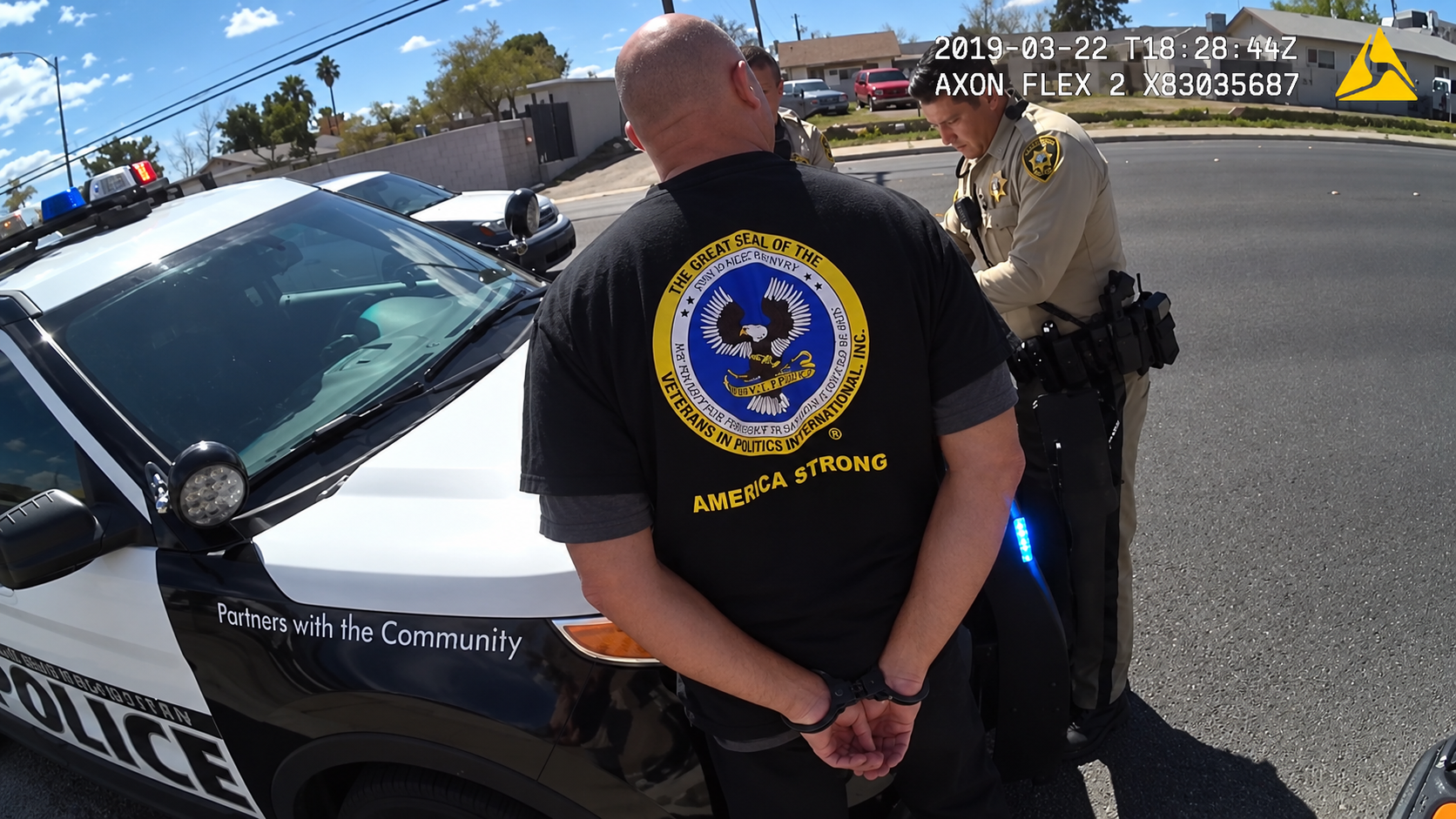
During a videotaped arrest later published online by Veterans in Politics, Sanson can be heard saying, “Soon as I jump in my car I'm going to call Kevin up”—an apparent reference to Clark County Sheriff Kevin McMahill. In another recorded police encounter, Sanson invoked judges while speaking with officers.Video timestampVideo timestamp
Those names were not mentioned during an abstract conversation about Nevada politics. They were invoked while police authority was being exercised against him.
The message did not have to be stated plainly. The names did the work.
Do you know who I know?
His access was not entirely imaginary. In 2025, KTNV reported that Sanson sent a video link directly to McMahill and Clark County District Attorney Steve Wolfson. McMahill forwarded the material to a police lieutenant for follow-up.KTNV report
None of this establishes that Sanson controls a sheriff, district attorney or judge. It does not establish that he could change the outcome of a custody case. And it does not prove the woman's sexual-assault allegation.
It establishes something narrower: Sanson cultivated access, advertised access and invoked access when it served him.
To a homeless mother who had gone years without seeing her child, the distinction between knowing a judge and controlling a judge may have felt academic. What mattered was that Sanson seemed able to reach people she could not.
He seemed to offer a path back to her son.
Long enough had passed for a child's face to change. Long enough for his voice to sound different. Long enough for a mother to wonder whether her son still remembered the smallest things about her—and whether anyone with power cared that she was missing them.
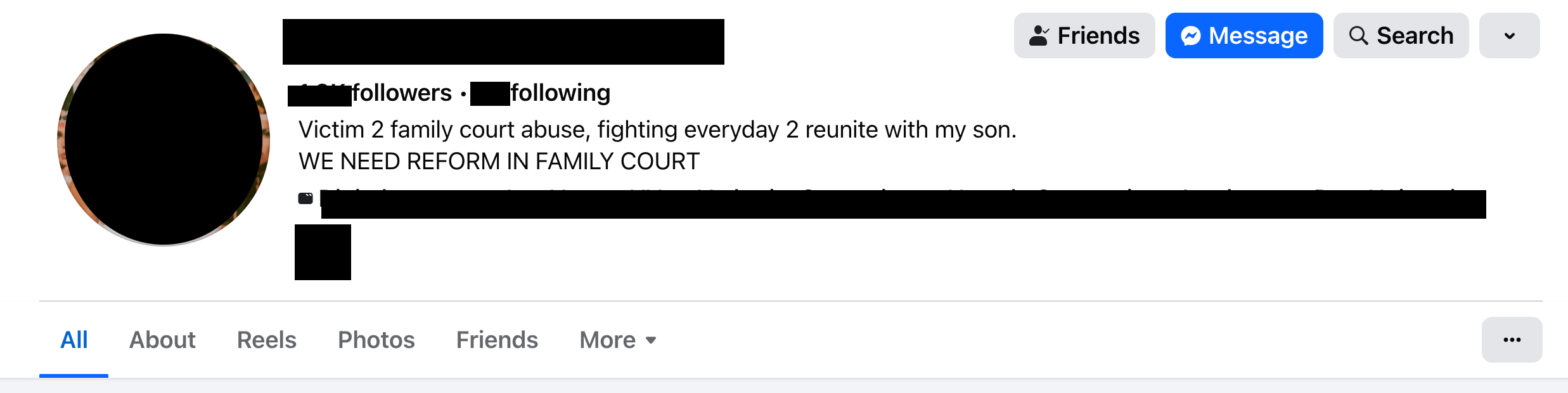
She says Sanson made her believe he cared.
Then, she says, the terms began to change.
In Facebook messages reviewed for this story, the woman said Sanson began talking about taking her to Mesquite to gamble.
“Right away it wasn't about my son,” she wrote.
When she tried to return to the reason she had accepted his help, she says Sanson responded, “Let me help you first.” He paid for her to have her nails done.
“I thought okay maybe after this he will help,” she wrote.
Maybe after this he will help.
There is no political strategy in that sentence. No talk of campaigns or endorsements. It is the sound of a desperate mother trying to understand the changing terms of a promise because the thing on the other side of that promise was her child.
She did not want a manicure.
She wanted her son.
She says the help never came.
What she alleges came instead was rape.
“He used my child to get close to me,” she wrote, “and then he raped me.”
The videos of Sanson invoking prominent names do not establish that an assault occurred. They corroborate only one part of the world the woman describes: Sanson presented himself as someone with connections inside the justice system.
She says those connections first drew her toward him—and later made her afraid to resist him or speak against him.
The hope and the fear came from the same place.
At first, she believed Sanson's influence might help her reach her son. Afterward, she feared that the same influence might be used against her.
That fear is not hers alone.
During the reporting of this story, several women contacted the author privately about Sanson. They described behavior they considered predatory. Some expressed relief that a woman was finally willing to tell her story. Some offered information. Some simply wanted her to know she was not alone.
Not one was willing to attach her name publicly to what she said.
Again and again, the reason was fear.
The women pointed to what they described as Sanson's tendency to attack people who speak against him. They feared becoming subjects of his videos, articles or political campaigns. They feared being humiliated, discredited or dragged through the most painful parts of their histories. They feared that a man who had spent years building a platform around exposing other people would turn that platform toward them.
Their private statements are not proof of the anonymous woman's allegation. Because they would not go on the record, their individual accounts are not being presented here as established facts.
But their shared unwillingness to be named reveals the environment in which this woman finally spoke.
It is easy to ask why a woman did not come forward when the person asking has nothing to lose by speaking.
It is harder to ask what she believed she stood to lose.
For a woman fighting for custody, struggling with housing, rebuilding a reputation or carrying a history she does not want displayed before strangers, a public attack does not have to destroy her life to influence her decision. It only has to threaten the fragile parts she is trying to hold together.
Influence works most effectively in the imagination. A sheriff does not have to answer the telephone. A judge does not have to intervene. A favor does not have to be called in.
The woman only has to believe the call could be made.
That is how the possibility of power becomes power.
It opens the door when help is promised. It closes mouths when the promise becomes fear.
Sanson's silence is not an admission. But it leaves the woman's account unanswered.
It also leaves unanswered the simplest questions in this story: Did he offer to help her regain access to her son? Did he tell her he knew judges who could help? Did he propose taking her to Mesquite? Did he pay for her nails after she asked again about her child? Did a sexual encounter occur? If it did, was it consensual? And why do multiple women say they are afraid to speak about him publicly?
Those are not political questions. They are the scrutiny that follows when someone builds influence by scrutinizing everyone else.
For years, Sanson has portrayed himself as a fighter for justice. He has demanded accountability from judges, candidates, police officers and political figures. He has built a platform by insisting that powerful people answer hard questions.
Now the hard questions belong to him.
And behind those questions is a woman who says she once believed he was the answer to hers.
She says Steve Sanson raped her.
According to her account, the influence Sanson had once presented as a source of hope became something else entirely.
It became fear.
The same claimed connections to judges and powerful people that had made her believe he could help her now made her afraid of what resisting him might cost—and what speaking out against him might bring.
What had begun with the promise, I know people who can help you, had, in her mind, become something far more chilling:
I know people who can hurt you.